Segmentation is an approach that helps businesses understand the differences between customer groups by exploring their needs, motivations, and decision-making processes.
While segmentation has long been a familiar concept in industries such as FMCG and fashion, it is becoming increasingly relevant in education sector in recent years, particularly in the K-12 segment (Kindergarten to Grade 12).
Driven by different parenting styles and expectations, alongside the growing diversity of educational approaches offered by schools today, the market has developed distinct parent segments, each with its own characteristics. Each group has different selection criteria, expectations, and decision-making processes. A “good school” for one group may not necessarily be the right choice for another. This makes it essential for educational institutions to understand who they are targeting, identify the parent segments that best align with their positioning, and tailor their approach accordingly.
The way segmentation is developed may vary depending on each school's characteristics (e.g., education level, overseas study orientation, or educational model). However, from a broader perspective, parents can be divided into four key segments:
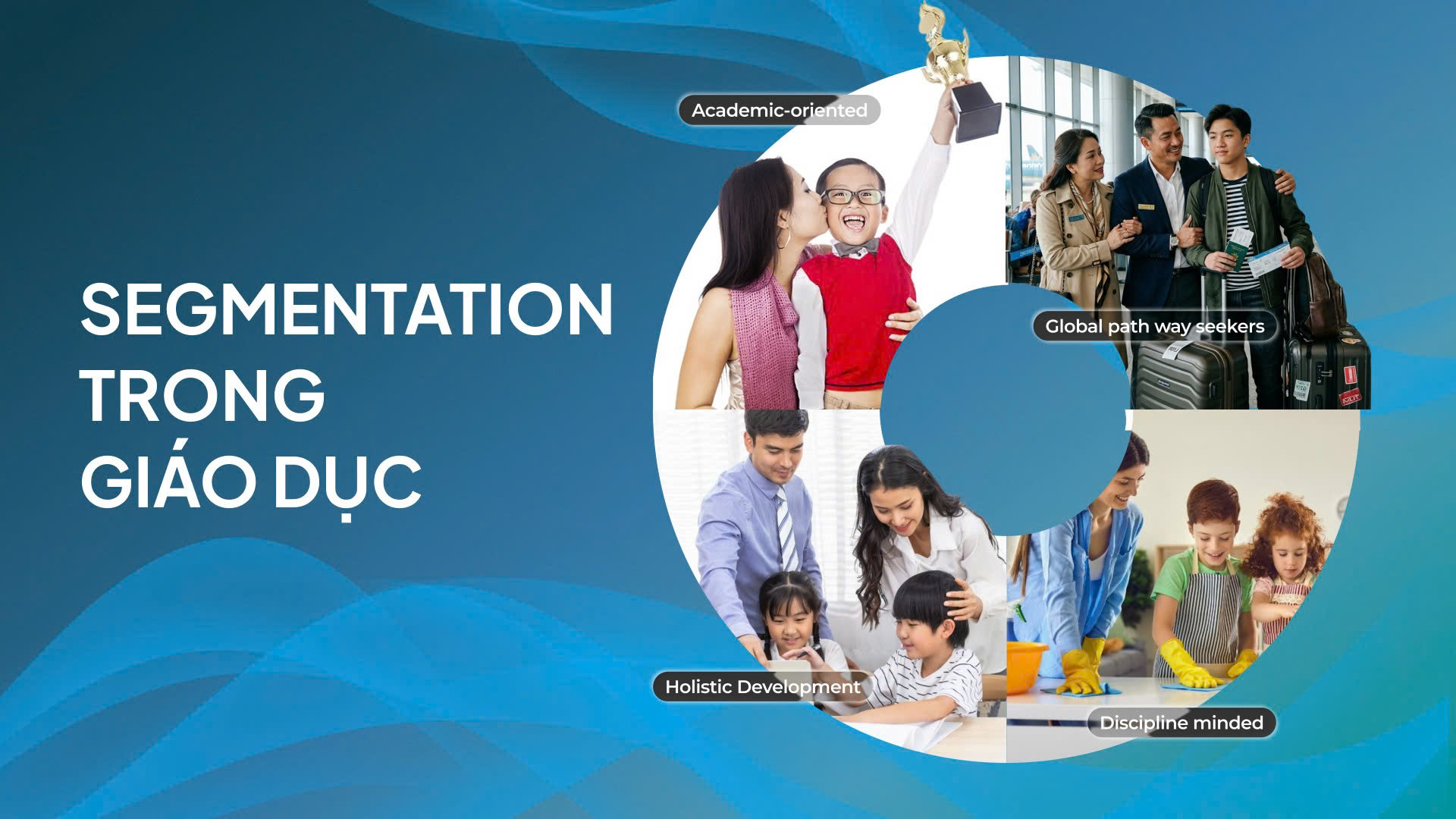
#1 “Academic-Oriented” Segment
For this group, academic excellence is the foundation of a child's long-term development and success. These parents tend to have high academic expectations and believe that education should follow a well-planned, structured pathway with clear and measurable outcomes.
A “good school” is one that delivers strong teaching quality and consistent academic results. Beyond high grades and admission to selective classes or specialised schools, they value a solid academic foundation that enables students to perform well in important examinations and maintain a competitive edge.
When choosing a school, they prioritise structured curricula, qualified and experienced teachers, a proven track record of academic achievement, and a learning environment that promotes discipline and academic growth.
How schools can attract this segment:
• Demonstrate academic quality through measurable outcomes and clear learning pathways.
• Consistently communicate teaching capabilities and student achievements.
• Offer well-structured curricula with sufficient academic depth.
• Build confidence that the school can help students achieve their academic goals.
#2 “Global Pathway Seekers” Segment
For these parents, education is a pathway to global opportunities. They want to prepare their children for future study and careers in an increasingly interconnected world.
Beyond academic programmes, they place strong emphasis on independent thinking, foreign language proficiency, and exposure to multicultural environments. What matters most to them is the opportunity to broaden their children's future prospects, rather than focusing solely on short-term academic results.
They seek schools that offer clear international learning pathways, going beyond English language education to include internationally recognised or integrated curricula, overseas study opportunities, international partnerships, and transfer pathways. They also value learning environments that help students develop a global mindset and the ability to adapt to international environments.
How schools can attract this segment:
• Clearly communicate international learning pathways and future study opportunities.
• Provide specific information about curricula, qualifications, and transfer options.
• Create an internationally oriented learning environment where foreign languages are actively used.
• Build confidence that students are well-equipped to study and thrive in a global environment.
#3 “Holistic Development” Segment
For these parents, education is about much more than academic achievement. They see it as a journey that nurtures a child's intellectual, emotional, and social development, while building essential life skills. They want their children to understand themselves, express their ideas with confidence, and develop the ability to adapt to an ever-changing world.
A “good school” is one that encourages students to explore, learn through experience, and grow at their own pace. Rather than placing too much pressure on academic performance at an early age, these parents value an environment that supports each child's individual development.
When exploring school options, they are drawn to educational models that emphasise hands-on learning and real-life experiences, offer diverse extracurricular activities, and encourage creativity, self-expression, and critical thinking. They also value schools that pay attention to each student's personal growth, rather than focusing solely on overall academic results.
How schools can attract this segment:
• Highlight students' personal development journeys, not just their academic achievements.
• Create a learning environment that encourages initiative, creativity, and self-discovery.
• Build confidence that the school can support students throughout their holistic development.
#4 “Discipline-Oriented” Segment
For these parents, discipline is an essential foundation for a child's development. They believe that building good habits, self-discipline, and a sense of responsibility from an early age will contribute to their children's long-term success, both academically and in life.
They value schools that provide a structured learning environment, with clear rules and consistent management. Such an environment helps students gradually develop self-control, accountability, and a sense of responsibility.
When choosing a school, they tend to favour institutions with clearly defined rules and consistent classroom management. They also look for schools that actively guide students' attitudes and behaviours, helping them develop self-discipline and take responsibility for their actions.
How schools can attract this segment:
• Demonstrate how the school fosters a positive and supportive culture of discipline, rather than relying on strict enforcement
• Communicate how the school helps students develop good habits and positive learning attitudes
• Build confidence that the school can support students in developing self-discipline and a strong sense of responsibility.
-------------------
With extensive expertise and experience in segmentation across various industries, GCOMM combines structured research methodologies, reliable data, and in-depth market understanding to uncover meaningful insights into different consumer groups.