The rapid growth of e-commerce and social commerce has made online shopping behavior an increasingly important area of focus for brands. In particular, the online shopper journey is becoming longer and more complex, involving multiple touchpoints along the way. A single purchase decision may now be shaped by various touchpoints, from viewing content on social media and searching for reviews, comparing products across e-commerce platforms, joining livestream sessions, to being affected by promotions or algorithm-driven recommendations.
In traditional shopper research, the concept of “shopping modes” has long been used to describe the different mindsets and motivations shoppers bring to different shopping occasions. This concept is equally relevant in the online environment. Even when purchasing the same product, shoppers may have entirely different objectives, behaviors, and motivations. As a result, treating all shopper journeys as uniform can easily lead brands to optimize the wrong content, deliver the wrong experience, and ultimately pursue the wrong conversion strategies in online commerce.
This is why segmentation in online shopping is increasingly becoming an important approach. Unlike segmentation in some other categories, which is often developed around consumers’ expectations and motivations for product selection, online shopping segmentation can be approached through the different shopping modes that shoppers exhibit.
Depending on the characteristics of each product category, the segmentation approach may vary. From a broader perspective, online shoppers can be grouped into three representative shopping modes, as introduced in this article.
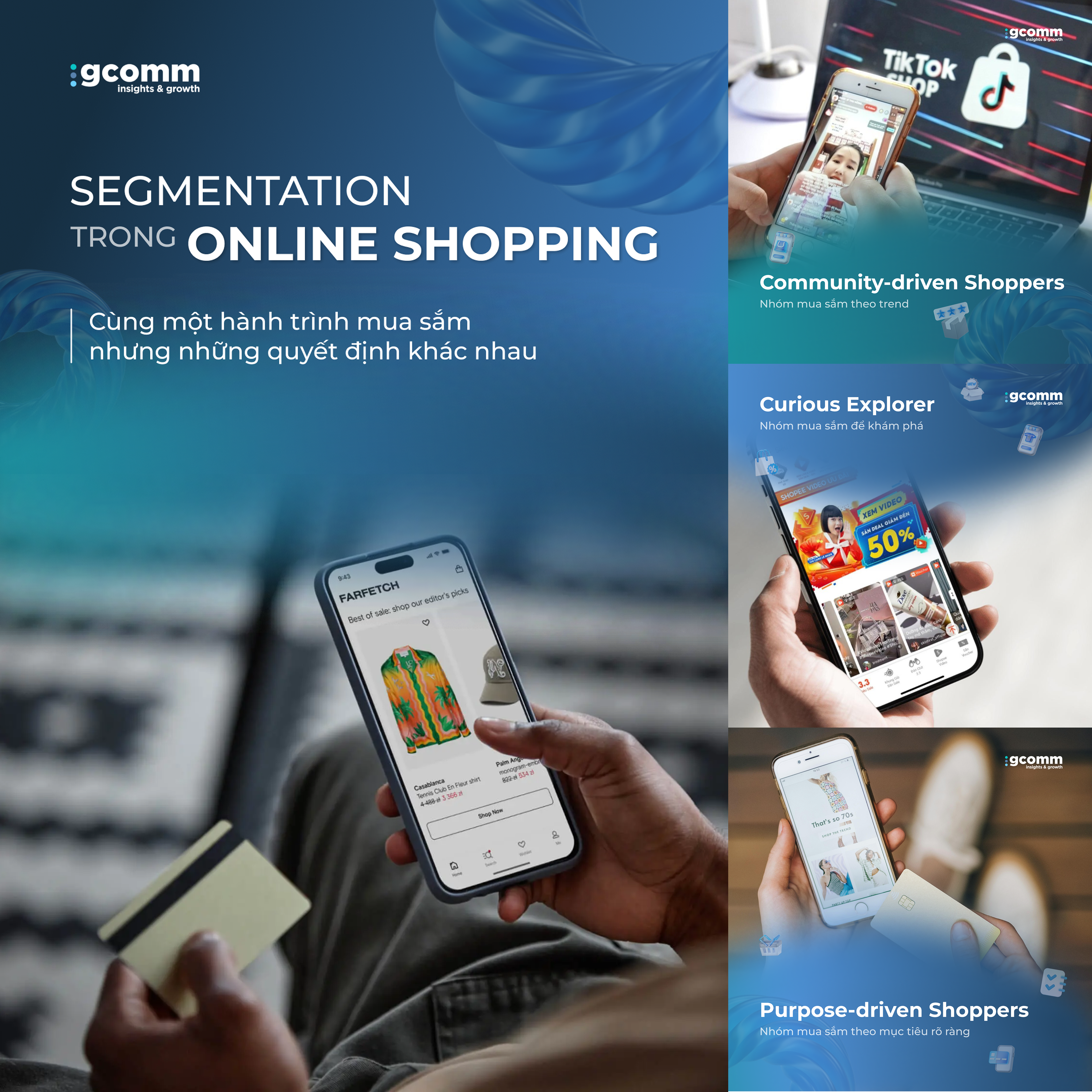
#1 Purpose-driven Shoppers: Shopping with a Clear Objective
This group consists of shoppers who visit online platforms with a relatively specific need already in mind. They usually know what they are looking for or have a particular product under consideration. For them, online shopping is primarily a way to fulfill a need quickly and efficiently, rather than an activity for entertainment or exploration.
Throughout their shopping journey, these shoppers tend to search with a clear purpose, compare information across multiple sources, and focus only on information that help simplify their decision-making. They rarely engage in discussions or interact with online communities, either before or after making a purchase. Once they have gathered enough information to make a decision, they are likely to leave the platform rather than continue engaging with it.
What they are really looking for is the confidence of “making the right purchase” — finding something that meets their needs, comes at the right price, and is reliable enough to support a quick decision without requiring too much deliberation. Consequently, overly promotional content, unsubstantiated reviews, or excessive and irrelevant information can quickly undermine their trust.
To attract this group of shoppers, brands should:
• Optimize product pages with clear, easy-to-read information and quick comparisons across product models or variants.
• Prioritize authentic reviews that provide practical insights into actual usage experiences, including product strengths and weaknesses before and after purchase.
• Make key information, such as pricing, promotions, delivery, and return policies, readily accessible early in the shopping journey.
#2 Curious Explorers: Shopping to Discover
Curious Explorers enter online platforms without necessarily having a specific need in mind. They often start with a broad intention, such as looking for something interesting or simply browsing to see which products are currently trending.
For this group, shopping is an engaging discovery experience. They tend to browse a wide range of content - from reviews to recommended products - as a way to explore things they may never have considered before. However, most of their engagement remains focused on gathering information and discovering new options, rather than actively contributing to discussions or posting post-purchase reviews.
What keeps these shoppers engaged is the feeling that there is always something new to discover - a new product, an emerging trend, or simply an idea they have never considered before. Repetitive experiences, products, and content that lack novelty can therefore quickly cause them to lose interest.
To attract this group of shoppers, brands should:
• Develop content that inspires discovery rather than focusing on direct selling, such as emerging trends, lesser-known products, or lifestyle-based recommendations..
• Encourage continued browsing by connecting related content and products.
• Prioritize short, accessible, and inspiring formats, such as short-form videos and storytelling, rather than focusing solely on product information.
#3 Community-driven Shoppers: Shopping Through Community
This group views online shopping as part of their everyday social interaction. They regularly follow online communities, read and participate in discussions, share experiences, and stay updated on what others are interested in. Their purchase decisions are not necessarily driven by a specific need from the outset; instead, these decisions gradually take shape through ongoing interactions with the community.
Throughout their shopping journey, these shoppers spend considerable time engaging with online communities. Even after making a purchase, they tend to continue providing feedback and writing reviews as a way to maintain their connection with the community.
For this group, the value of online shopping lies in the sense of belonging to a community of people who share similar interests and have common topics to discuss. Brands that focus solely on selling, without creating opportunities for interaction, may find it difficult to maintain their engagement over time.
To attract this group of shoppers, brands should:
• Create touchpoints that encourage interactions among shoppers, such as pinned comments, interactive Q&A livestreams, or communities where users can share their experiences.
• Encourage post-purchase reviews by reposting user-generated content, highlighting notable reviews, or offering vouchers for authentic experience sharing.
• Collaborate with creators to generate discussions and social buzz through product reviews, comparisons, and real-life usage experiences.
-------------------
With extensive expertise and proven experience in conducting segmentation studies across diverse industries, GCOMM brings together rigorous research methodologies, reliable data, and in-depth market understanding.